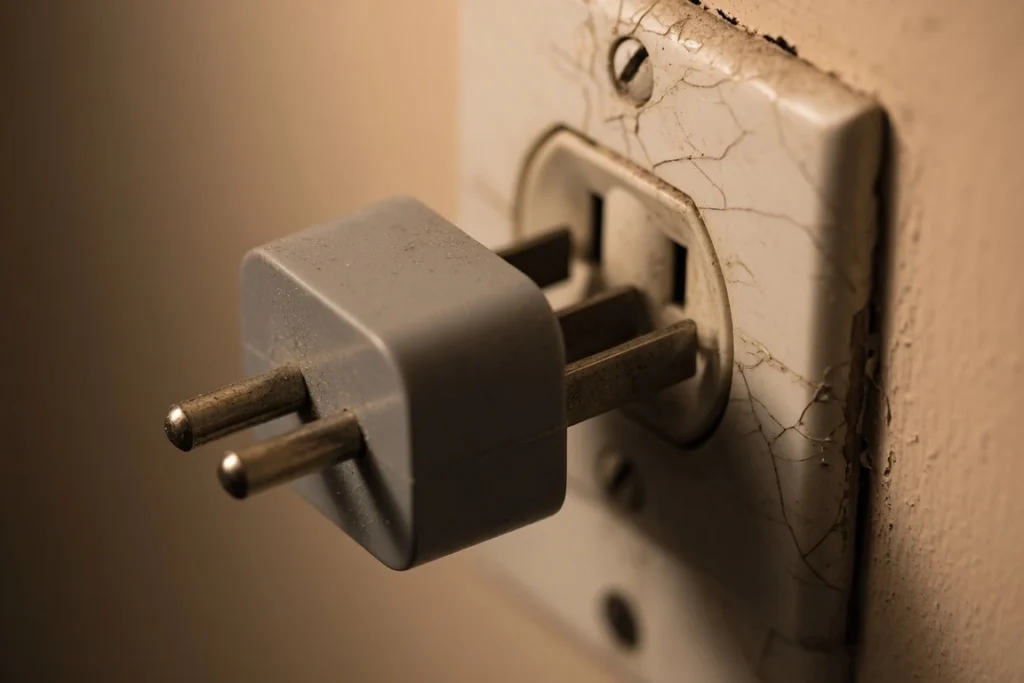
Plug adapters are one of those small, cheap conveniences most of us have reached for at some point — a little gray “cheater plug” that lets a three-prong cord fit into an older two-slot outlet. They’re easy to find, easy to use, and they work. But “it works” and “it’s safe” are not the same thing. In most homes, a plug adapter is a temporary workaround at best, and in the wrong situation it quietly removes a safety feature that’s there to protect you.
At J. Christie Electrical Contractor LLC, we see a lot of these adapters in older Northern New Jersey homes. Here’s an honest look at when they’re acceptable, when they’re risky, and what the safer fix actually is.
What a Plug Adapter Actually Does
A three-prong-to-two-prong adapter lets a grounded plug physically connect to an ungrounded, two-slot receptacle. The catch is the third prong. On a modern three-prong plug, that round prong is the ground — a dedicated path that carries stray electricity safely away if something inside the appliance fails. When you bridge a three-prong plug into a two-prong outlet, that ground path usually goes nowhere.
So what happens during a fault? Instead of flowing harmlessly to ground, electricity looks for the next available path — and that path can be water, nearby wiring, the metal casing of an appliance, or a person. That’s the core reason a plug adapter is not a true substitute for a grounded outlet.
Are Plug Adapters Ever Safe?
Sometimes — with conditions. According to the U.S. Consumer Product Safety Commission, an adapter can be used safely only if its grounding tab or wire is physically connected to a real electrical ground, such as a properly grounded metal outlet box, and you confirm that ground actually exists. The CPSC’s Home Electrical Safety Checklist lists three-prong adapters as an item worth inspecting for exactly this reason.
The problem is that the box behind an old two-prong outlet often isn’t grounded — and you can’t tell by looking. The only way to know is to test it with a receptacle tester or multimeter, or have an electrician check it. If that grounding tab is just dangling against a screw that connects to nothing, the adapter is giving you the appearance of safety without the substance.
A few other realities worth knowing:
- Never break off or remove a ground prong to force a plug in. That leaves the appliance unprotected everywhere you plug it in afterward.
- Don’t use adapters with major appliances. Older two-slot circuits were often run with low-amp, cloth-insulated wiring that isn’t rated for today’s high-draw devices. Pushing a refrigerator, space heater, or window AC through an adapter can overheat the wiring and lead to tripped breakers, arcing, or fire.
- Watch the hidden “bootleg ground.” Swapping in a three-prong outlet on an ungrounded circuit — without a real ground — is just as unsafe as a cheater plug, and worse in one way: the next person sees three slots and assumes it’s protected when it isn’t.
When Adapters Make Sense — and When They Don’t
There’s one place adapters earn their keep: traveling. Different countries use different outlets, and an adapter is often the only way to plug in abroad. Many travel devices — phone chargers, laptop bricks, camera chargers labeled 100–240V — are double-insulated and built without a ground pin in the first place, so an ungrounded adapter doesn’t strip away protection that was ever there.
At home, it’s a different story. If you find yourself relying on adapters around the house to make modern electronics fit old outlets, that’s a sign your wiring has fallen behind — not a problem to solve with a $2 gadget. Permanent reliance on adapters is the situation to avoid.
A Note on Warranties and Insurance
There’s a practical cost, too. Plug adapters typically come with no meaningful warranty, and manufacturers may void an appliance’s warranty if it was connected through an adapter. Just as important, if a fire or damage traces back to a malfunctioning adapter or an ungrounded setup, your homeowner’s insurance claim could be challenged. The “cheap fix” can get expensive fast.
The Safer Fix: Proper Grounding
If your home leans on adapters, the real solution is to bring the outlets up to modern, grounded standards. A licensed electrician has two code-compliant paths, depending on your wiring:
| Option | What’s Involved | Best For |
| Run a true ground / rewire | A new grounded cable is run back to the panel for a genuine three-prong outlet | The gold-standard, long-term fix |
| GFCI receptacle | A GFCI replaces the old outlet and protects against shock even without a ground wire; it must be labeled “No Equipment Ground” | A code-compliant upgrade when running new wire isn’t practical |
Both options give you real protection that an adapter can’t. Which one fits your home depends on what’s behind the wall — and that’s exactly what an inspection of your electrical outlets and electrical panel is for. In older homes especially, an electrician can also flag aging wiring or an undersized service while they’re at it.
Stop Relying on Adapters — Upgrade with J. Christie Electric
Plug adapters are fine in a pinch when you’ve confirmed a real ground, and they’re often unavoidable when you travel. But as a long-term answer to old, ungrounded outlets, they’re a risk that isn’t worth taking. The safer, lasting move is to have your outlets properly grounded or upgraded by a professional.
- Christie Electrical Contractor LLC has served Northern New Jersey for 20+ years, fully licensed (NJ Electrical Contractor #17914), bonded, and insured. We’ll test your existing outlets, tell you honestly whether they’re grounded, and handle the upgrade the right way. Our residential electrical services team is ready when you are — call (201) 310-5402 and ask for Jason, or contact us for a free assessment.
Frequently Asked Questions
Is it safe to use a three-prong adapter on a two-prong outlet?
Only if the outlet box is genuinely grounded and the adapter’s grounding tab is connected to it. In many older homes the box isn’t grounded, which makes the adapter unsafe for long-term use.
Can I just break off the third prong instead?
No. Removing a ground prong leaves the appliance unprotected anywhere you plug it in, including in properly grounded outlets later. It’s a serious shock and fire risk.
Why shouldn’t I plug a refrigerator or space heater into an adapter?
Old two-prong circuits often use lower-amp, dated wiring that can’t safely handle high-draw appliances. The added load can overheat the wiring and create a fire hazard.
Is replacing a two-prong outlet with a three-prong outlet enough?
Not on its own. Without a real ground wire, a three-prong outlet creates a false sense of safety. A grounded rewire or a properly labeled GFCI is the code-compliant fix.
Are travel plug adapters safe?
For double-insulated, wide-voltage devices like phone and laptop chargers, yes — they were designed without a ground pin. Just remember an adapter doesn’t convert voltage, only fit.